
Thursday, 27 June 2013
6 tips to keep your data safe from spying
Experts say there are steps anyone can take to improve privacy, but they only go so far.

Wednesday, 19 June 2013
HTCButterflyS OfficiallyAnnounced, Features Ultra-Pixel Camera
Last week we saw some leaked photos of the new HTC Butterfly S, the handset has now been announced in Taiwan and we have all the specifications on new Android smartphone.
You should rejoice as the Butterfly S packs a massive 3,200 mAh battery, a big upgrade over its predecessor which had a 2020 mAh battery The new HTC Butterfly S comes with a Snapdragon 600 quad core processor clocked at 1.9GHz. It has a 5 inch full HD display with a resolution of 1920 x 1080 pixels.
Other specifications on the HTC Butterfly S include 16GB of built in storage and a HTC Ultrapixel camera, the device also comes with HTC Boom Sound speakers.
The device runs on Android 4.2 with HTC Sense 5.0, and hence has the HTC Zoe feature. Blinkfeed is likely to be brought to the device as well.
In terms of the connectivity, the phone comes with quad-band HSPA , Wi-Fi a/ac/b/g/n, Bluetooth 4.0, Infrared and GPS.
The HTC Butterfly S is a little chunky, weighing in at 160 grams and measuring 10.6 mm in thickness, but that's what you get when you dramatically increase the battery size.
The HTC Butterfly S will go on sale in Taiwan in July it will also launch in Europe and Asia later this summer, although we do not have any details on an exact launch date.
--
You should rejoice as the Butterfly S packs a massive 3,200 mAh battery, a big upgrade over its predecessor which had a 2020 mAh battery The new HTC Butterfly S comes with a Snapdragon 600 quad core processor clocked at 1.9GHz. It has a 5 inch full HD display with a resolution of 1920 x 1080 pixels.
Other specifications on the HTC Butterfly S include 16GB of built in storage and a HTC Ultrapixel camera, the device also comes with HTC Boom Sound speakers.
The device runs on Android 4.2 with HTC Sense 5.0, and hence has the HTC Zoe feature. Blinkfeed is likely to be brought to the device as well.
In terms of the connectivity, the phone comes with quad-band HSPA , Wi-Fi a/ac/b/g/n, Bluetooth 4.0, Infrared and GPS.
The HTC Butterfly S is a little chunky, weighing in at 160 grams and measuring 10.6 mm in thickness, but that's what you get when you dramatically increase the battery size.
The HTC Butterfly S will go on sale in Taiwan in July it will also launch in Europe and Asia later this summer, although we do not have any details on an exact launch date.
--
K
Tuesday, 18 June 2013
6 TIPS TO MAINTAIN YOUR ONLINE PRIVACY
Phone call logs, credit card records, emails, Skype chats, Facebook message, and more. The precise nature of the NSA's sweeping surveillance apparatus has yet to be confirmed.
But given the revelations spilling out into the media recently, there hardly seems a single aspect of daily life that isn't somehow subject to spying or surveillance by someone.
Experts say there are steps anyone can take to improve privacy, but they only go so far.
Using anonymity services and encryption "simply make it harder, but not impossible," said Ashkan Soltani, an independent privacy and security researcher. "Someone can always find you just depends on how motivated they are."
With that caveat, here are some basic tips to enhance your privacy
1) Encrypt your emails Emails sent across the Web are like postcards. In some cases, they're readable by anyone standing between you and its recipient. That can include your webmail company, your Internet service provider and whoever is tapped into the fiber optic cable passing your message around the globe - not to mention a parallel set of observers on the recipient's side of the world.
Experts recommend encryption, which scrambles messages in transit, so they're unreadable to anyone trying to intercept them. Techniques vary, but a popular one is called PGP, short for "Pretty Good Privacy." PGP is effective enough that the U.S. government tried to block its export in the mid-1990s, arguing that it was so powerful it should be classed as a weapon.
Disadvantages Encryption can be clunky. And to work, both parties have to be using it.
2) Use TOR Like emails, your travels around the Internet can easily be tracked by anyone standing between you and the site you're trying to reach. TOR, short for "The Onion Router," helps make your traffic anonymous by bouncing it through a network of routers before spitting it back out on the other side. Each trip through a router provides another layer of protection, thus the onion reference.
Originally developed by the U.S. military, TOR is believed to work pretty well if you want to hide your traffic from, let's say, eavesdropping by your local Internet service provider. And criminals' use of TOR has so frustrated Japanese police that experts there recently recommended restricting its use. But it's worth noting that TOR may be ineffective against governments equipped with the powers of global surveillance.
Disadvantages Browsing the web with TOR can be painfully slow. And some services - like file swapping protocols used by many Internet users to share videos and music - aren't compatible.
3) Ditch the phone Your everyday cellphone has all kinds of privacy problems. In Britain, cellphone safety was so poor that crooked journalists made a cottage industry out of eavesdropping on their victims' voicemails. In general, proprietary software, lousy encryption, hard-to-delete data and other security issues make a cellphone a bad bet for storing information you'd rather not share.
An even bigger issue is that cellphones almost always follow their owners around, carefully logging the location of every call, something which could effectively give governments a daily digest of your everyday life. Security researcher Jacob Appelbaum has described cellphones as tracking devices that also happen to make phone calls. If you're not happy with the idea of an intelligence agency following your footsteps across town, leave the phone at home.
Disadvantages Not having a cellphone handy when you really need it. Other alternatives, like using "burner" phones paid for anonymously and discarded after use, rapidly become expensive.
4) Cut up your credit cards The Wall Street Journal says the NSA is monitoring American credit card records in addition to phone calls. Some cybercriminals can use the same methods. So stick to cash, or, if you're more adventurous, use electronic currencies to move your money around if you want total privacy.
Disadvantages Credit cards are a mainstay of the world payment system, so washing your hands of plastic money is among the most difficult moves you can make. In any case, some cybercurrency systems offer only limited protection from government snooping and many carry significant risks. The value of Bitcoin, one of the better-known forms of electronic cash, has oscillated wildly, while users of another popular online currency, Liberty Reserve, were left out of pocket after the company behind it was busted by international law enforcement.
5) Don't keep your data in America or with American companies U.S. companies are subject to U.S. law, including the Patriot Act, whose interpretations are classified. Although the exact parameters of the PRISM data mining program revealed by the Guardian and The Washington Post remain up for debate, what we do know is that a variety of law enforcement officials - not just at the NSA - can secretly demand your electronic records without a warrant through an instrument known as a National Security Letter. Such silent requests are made by the thousands every year.
If you don't like the sound of that, your best bet is to park your data in a European country, where privacy protections tend to be stronger.
Disadvantages Silicon Valley's Internet service providers tend to be better and cheaper than their foreign counterparts. What's more, there's no guarantee that European spy agencies don't have NSA-like surveillance arrangements with their own companies. When hunting for a safe place to stash your data, look for smaller countries with robust human rights records. Iceland, long a hangout for WikiLeaks activists, might be a good bet.
6) Steer clear of malicious software If they can't track it, record it, or intercept it, an increasing number of spies aren't shy about hacking their way in to steal your data outright. Edward Snowden, the NSA leaker, warned the Guardian that his agency had been on a worldwide binge of cyber-attacks.
"We hack everyone everywhere," he said.
Former officials don't appear to contradict him. Ex-NSA chief Michael Hayden described it as "commuting to where the information is stored and extracting the information from the adversaries' network." In a recent interview with Bloomberg Businessweek, he boasted that "we are the best at doing it. Period."
Malicious software used by hackers can be extremely hard to spot. But installing an antivirus program, avoiding attachments, frequently changing passwords, dodging suspicious websites, creating a firewall, and always making sure your software is up to date is a good start.
Disadvantages Keeping abreast of all the latest updates and warily scanning emails for viruses can be exhausting.
--
But given the revelations spilling out into the media recently, there hardly seems a single aspect of daily life that isn't somehow subject to spying or surveillance by someone.
Experts say there are steps anyone can take to improve privacy, but they only go so far.
Using anonymity services and encryption "simply make it harder, but not impossible," said Ashkan Soltani, an independent privacy and security researcher. "Someone can always find you just depends on how motivated they are."
With that caveat, here are some basic tips to enhance your privacy
1) Encrypt your emails Emails sent across the Web are like postcards. In some cases, they're readable by anyone standing between you and its recipient. That can include your webmail company, your Internet service provider and whoever is tapped into the fiber optic cable passing your message around the globe - not to mention a parallel set of observers on the recipient's side of the world.
Experts recommend encryption, which scrambles messages in transit, so they're unreadable to anyone trying to intercept them. Techniques vary, but a popular one is called PGP, short for "Pretty Good Privacy." PGP is effective enough that the U.S. government tried to block its export in the mid-1990s, arguing that it was so powerful it should be classed as a weapon.
Disadvantages Encryption can be clunky. And to work, both parties have to be using it.
2) Use TOR Like emails, your travels around the Internet can easily be tracked by anyone standing between you and the site you're trying to reach. TOR, short for "The Onion Router," helps make your traffic anonymous by bouncing it through a network of routers before spitting it back out on the other side. Each trip through a router provides another layer of protection, thus the onion reference.
Originally developed by the U.S. military, TOR is believed to work pretty well if you want to hide your traffic from, let's say, eavesdropping by your local Internet service provider. And criminals' use of TOR has so frustrated Japanese police that experts there recently recommended restricting its use. But it's worth noting that TOR may be ineffective against governments equipped with the powers of global surveillance.
Disadvantages Browsing the web with TOR can be painfully slow. And some services - like file swapping protocols used by many Internet users to share videos and music - aren't compatible.
3) Ditch the phone Your everyday cellphone has all kinds of privacy problems. In Britain, cellphone safety was so poor that crooked journalists made a cottage industry out of eavesdropping on their victims' voicemails. In general, proprietary software, lousy encryption, hard-to-delete data and other security issues make a cellphone a bad bet for storing information you'd rather not share.
An even bigger issue is that cellphones almost always follow their owners around, carefully logging the location of every call, something which could effectively give governments a daily digest of your everyday life. Security researcher Jacob Appelbaum has described cellphones as tracking devices that also happen to make phone calls. If you're not happy with the idea of an intelligence agency following your footsteps across town, leave the phone at home.
Disadvantages Not having a cellphone handy when you really need it. Other alternatives, like using "burner" phones paid for anonymously and discarded after use, rapidly become expensive.
4) Cut up your credit cards The Wall Street Journal says the NSA is monitoring American credit card records in addition to phone calls. Some cybercriminals can use the same methods. So stick to cash, or, if you're more adventurous, use electronic currencies to move your money around if you want total privacy.
Disadvantages Credit cards are a mainstay of the world payment system, so washing your hands of plastic money is among the most difficult moves you can make. In any case, some cybercurrency systems offer only limited protection from government snooping and many carry significant risks. The value of Bitcoin, one of the better-known forms of electronic cash, has oscillated wildly, while users of another popular online currency, Liberty Reserve, were left out of pocket after the company behind it was busted by international law enforcement.
5) Don't keep your data in America or with American companies U.S. companies are subject to U.S. law, including the Patriot Act, whose interpretations are classified. Although the exact parameters of the PRISM data mining program revealed by the Guardian and The Washington Post remain up for debate, what we do know is that a variety of law enforcement officials - not just at the NSA - can secretly demand your electronic records without a warrant through an instrument known as a National Security Letter. Such silent requests are made by the thousands every year.
If you don't like the sound of that, your best bet is to park your data in a European country, where privacy protections tend to be stronger.
Disadvantages Silicon Valley's Internet service providers tend to be better and cheaper than their foreign counterparts. What's more, there's no guarantee that European spy agencies don't have NSA-like surveillance arrangements with their own companies. When hunting for a safe place to stash your data, look for smaller countries with robust human rights records. Iceland, long a hangout for WikiLeaks activists, might be a good bet.
6) Steer clear of malicious software If they can't track it, record it, or intercept it, an increasing number of spies aren't shy about hacking their way in to steal your data outright. Edward Snowden, the NSA leaker, warned the Guardian that his agency had been on a worldwide binge of cyber-attacks.
"We hack everyone everywhere," he said.
Former officials don't appear to contradict him. Ex-NSA chief Michael Hayden described it as "commuting to where the information is stored and extracting the information from the adversaries' network." In a recent interview with Bloomberg Businessweek, he boasted that "we are the best at doing it. Period."
Malicious software used by hackers can be extremely hard to spot. But installing an antivirus program, avoiding attachments, frequently changing passwords, dodging suspicious websites, creating a firewall, and always making sure your software is up to date is a good start.
Disadvantages Keeping abreast of all the latest updates and warily scanning emails for viruses can be exhausting.
--
K
Huawei Ascend P6 official ahead of formal launch
released the press release detailing the features and specifications of the Ascend P6 smartphone.
The super slim phone comes with a 4.7-inch in-cell LCD screen that has a resolution of 720x1280 pixels. It's powered by Huawei's in-house chipset that has a 1.5GHz quad-core Cortex-A9 processor and 2GB of RAM. It includes an 8-megapixel rear camera with a BSI sensor capable of recording 1080p video and a 5-megapixel front facing camera. The phone runs Android 4.2.2 Jelly Bean and features Emotion UI layer on top. It offers 8GB of internal storage expandable via microSD card and has a 2000 mAh battery.
The Huawei Ascend P6 sports a slender profile at just 6.18mm and weighs 120 grams. The phone seems to have a boxy look with a curve on the bottom edge. The right side of the smartphone features the power button, volume rocker with the SIM card slots. The other side looks to have a headphone jack on the bottom. The smartphone is expected to come in White, Pink and Black colours.
The phone offers dual-SIM with dual stand-by support in addition to HSPA, Wi-Fi, Bluetooth and FM radio.
The phone's specifications had leaked a few days back complete with its thickness and the resolution of its cameras. Screenshots of the phone's user interface were also leaked. Huawei earlier posted a teaser video for the device as well. Adding to the hype around the product launch, the CEO of the company, Richard Yu recently shared a teaser photograph of the device on his Facebook page as well.
The Huawei Ascend P6 will be available in China this month followed by a rollout in Western Europe and other regions.
--
The super slim phone comes with a 4.7-inch in-cell LCD screen that has a resolution of 720x1280 pixels. It's powered by Huawei's in-house chipset that has a 1.5GHz quad-core Cortex-A9 processor and 2GB of RAM. It includes an 8-megapixel rear camera with a BSI sensor capable of recording 1080p video and a 5-megapixel front facing camera. The phone runs Android 4.2.2 Jelly Bean and features Emotion UI layer on top. It offers 8GB of internal storage expandable via microSD card and has a 2000 mAh battery.
The Huawei Ascend P6 sports a slender profile at just 6.18mm and weighs 120 grams. The phone seems to have a boxy look with a curve on the bottom edge. The right side of the smartphone features the power button, volume rocker with the SIM card slots. The other side looks to have a headphone jack on the bottom. The smartphone is expected to come in White, Pink and Black colours.
The phone offers dual-SIM with dual stand-by support in addition to HSPA, Wi-Fi, Bluetooth and FM radio.
The phone's specifications had leaked a few days back complete with its thickness and the resolution of its cameras. Screenshots of the phone's user interface were also leaked. Huawei earlier posted a teaser video for the device as well. Adding to the hype around the product launch, the CEO of the company, Richard Yu recently shared a teaser photograph of the device on his Facebook page as well.
The Huawei Ascend P6 will be available in China this month followed by a rollout in Western Europe and other regions.
--
K
HTC DESIRE 200 LAUNCHED
HTC has officially announced a new budget Android offering, Desire 200.
This smartphone packs in 3.5-inch display with a resolution of 320X480 pixels. HTC Desire 200 comes with Qualcomm's Snapdragon S1 processor that clocks 1GHz along with 512MB of RAM. The internal storage available on this smartphone is 4GB and can be expanded by up to 32GB via microSD card.
HTC Desire 200 comes with 1,230mAh battery, which as per the company's claims, gives seven and a half hours talk time on 3G and a standby time of 812 hours. For camera, there is a 5-megapixel rear shooter on board along with a VGA front camera. Just like the other smartphones from HTC's stable this smartphone too will come with Beats Audio.
Connectivity options include Wi-Fi 802.11 b/g/n, Bluetooth 4.0, Micro-USB and GPS. HTC Desire 200 comes with accelerometer, proximity and ambient light sensor. The smartphone will be available in Black and While colour options. It is not clear which version of Android this smartphone is running on.
--
This smartphone packs in 3.5-inch display with a resolution of 320X480 pixels. HTC Desire 200 comes with Qualcomm's Snapdragon S1 processor that clocks 1GHz along with 512MB of RAM. The internal storage available on this smartphone is 4GB and can be expanded by up to 32GB via microSD card.
HTC Desire 200 comes with 1,230mAh battery, which as per the company's claims, gives seven and a half hours talk time on 3G and a standby time of 812 hours. For camera, there is a 5-megapixel rear shooter on board along with a VGA front camera. Just like the other smartphones from HTC's stable this smartphone too will come with Beats Audio.
Connectivity options include Wi-Fi 802.11 b/g/n, Bluetooth 4.0, Micro-USB and GPS. HTC Desire 200 comes with accelerometer, proximity and ambient light sensor. The smartphone will be available in Black and While colour options. It is not clear which version of Android this smartphone is running on.
--
K
Friday, 14 June 2013
IS THIS THE NEXT-GEN NEXUS 7 ????
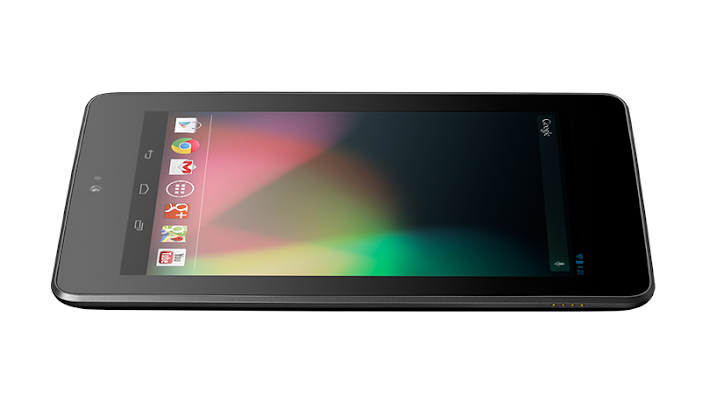
AN ANNOUNCED TAB BY ASUS CARRYING THE NEXUS BRAND NAME HAS BEEN SPOTTED AT FCC (Federal Communications Commission) AS WELL AS AT BLUETOOTH SIG.
(READ AHEAD FOR THE DETAILS....)
GALAXY NOT 3 : 13 MP CAMERA GETS CONFIRMED

THE CAMERA RESOLUTION FOR THE MOST HOTLY ANTICIPATED PHONE FROM SAMSUNG IS NOW CONFIRMED BY AN IMAGE WHICH WAS UPLOADED TO PICASA.
(READ AHEAD FOR THE DETAILS....)
Subscribe to:
Posts (Atom)